Source Animal Style Sleep Eye Mask for Travel, Office, and Home
Find 30 animal style sleep eye mask options from China. Compare features like cotton, silk, and foam materials, along with OEM/ODM customization and certifications such as CE and FDA for bulk sourcing needs; compare the available evidence and request quotations based on your requirements.
Key considerations
Products List




Comprehensive Sourcing Guide
Animal Style Sleep Eye Mask Sourcing Guide
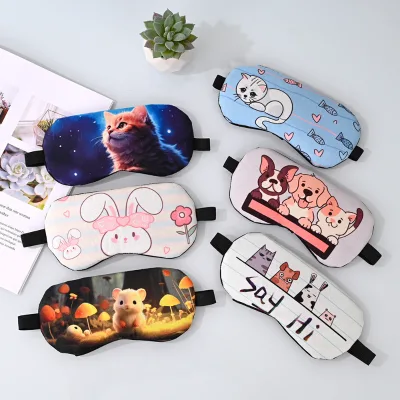
Procuring animal style sleep eye masks requires balancing aesthetic appeal with functional comfort for adult users. The market offers designs ranging from fruit motifs to generic animal prints, often utilizing soft materials like silk, cotton, or soft foam to ensure a gentle fit against the skin. Buyers must verify that the "Keep Warm" and "Health Care" features align with the intended use case, whether for indoor relaxation or outdoor travel, as these attributes directly impact user satisfaction and product longevity.
Sourcing decisions should prioritize suppliers who offer robust customization options for logos, colors, and packaging. While standard models exist, the ability to tailor the product model, such as the "Decorative-098F" or "DV" series, allows brands to differentiate their offerings. It is critical to confirm that the "OEM" and "ODM" supply types are available, ensuring the manufacturer can adapt the eye mask's form, whether compressed or standard, to meet specific branding and functional requirements without compromising the core sleep support features.
Product Scope and Observed Listing Signals
The observed product listings indicate a wide range of price points and minimum order quantities, suggesting a diverse supplier base catering to different budget constraints. Prices observed between 0.2 and 20 USD reflect variations in material quality, from basic polyester to premium silk, while MOQs ranging from 2 to 10,000 pieces highlight the flexibility of manufacturers to serve both small startups and large retailers. Buyers should carefully analyze these signals to determine if a supplier's scale matches their volume needs and if the price point justifies the material composition and feature set.
Listing details often reveal specific packaging standards, such as color gift boxes, OPP bags, or polybags, which influence the final retail presentation and cost structure. Some suppliers offer "Each Packed in a Polybag" while others provide "Silk Bag" or "Carton" options, directly affecting the perceived value of the product. When evaluating listings, verify if the "Standard or Customized Size" and "Standard or Customized Color" options are genuinely available or if they are merely marketing terms, as this distinction determines the feasibility of creating a unique product line.
Technical Specifications to Verify
Technical verification must begin with the material composition, as the listed options include cotton, soft foam, polyester, and silk, each offering distinct tactile experiences and durability profiles. Buyers should request physical samples to confirm the "Medium" thickness and ensure the "Non-Tilted" design provides consistent pressure distribution across the eyes. It is essential to validate that the "Manual" power supply and "Folding" capability meet the portability expectations of the target demographic, ensuring the mask remains comfortable during both stationary sleep and travel scenarios.
Dimensional accuracy and form factor are equally critical, with specifications ranging from "2010cm" to "4026*19cm" depending on the packaging and product model. The "Compressed" mask form suggests a specific manufacturing process that may affect the final shape and comfort, requiring careful assessment against the "Standard or Customized Size" claims. Additionally, the "Silk Printing" or "Printing" logo application methods must be tested for durability and clarity, ensuring that the branding does not compromise the softness or integrity of the eye mask during repeated use.
Compliance and Safety Documentation
Safety compliance is paramount for products intended for direct skin contact, particularly those marketed for health care and sleep support. The presence of certifications such as MSDS, FDA, CE, SGS, and BSCI indicates a supplier's commitment to meeting international safety and ethical standards. Buyers must verify that these certifications are current and applicable to the specific materials used, such as silk or foam, to ensure the product is free from harmful substances and safe for adult use in various environments.
Documentation should also cover the manufacturing standards, which are listed as "Customized" or "Standard," requiring explicit confirmation of the quality control protocols in place. The "New" condition of the products implies a focus on hygiene and freshness, but this must be backed by rigorous testing data regarding material safety and chemical resistance. Procurement teams should request copies of the relevant test reports to validate that the "Indoor,Outdoor" usage claims are supported by performance data, ensuring the masks remain safe and effective under different ambient conditions.
Cost Drivers and Commercial Terms
Cost structures are heavily influenced by the level of customization required, including logo printing, color variations, and unique packaging solutions. While standard models may offer lower unit costs, the "Customized" material and "Standard or Customized Size" options can significantly increase production expenses. Buyers need to understand how these variables impact the final price, especially when balancing the desire for a unique "Animal Style" design against the budget constraints imposed by the observed price range of 0.2 to 20 USD.
Commercial terms, particularly Minimum Order Quantities (MOQ), vary widely, with some suppliers requiring 500 pieces while others demand 1,000 or even 10,000. These thresholds directly affect inventory risk and cash flow, necessitating a clear negotiation strategy to align order volumes with sales forecasts. Additionally, the "Supply Type" of OEM/ODM suggests that production lead times and tooling costs may be factored into the pricing, requiring a detailed review of the total cost of ownership rather than just the unit price to ensure long-term profitability.
Supplier Qualification and Quality Control
Supplier qualification should focus on verifying the origin and production capabilities, with many listings indicating a "Shanghai" or "China" origin. Buyers must assess the supplier's capacity to handle "Customized" orders consistently, ensuring that the "Standard and customized" product models maintain quality across different batches. It is advisable to conduct on-site audits or request third-party inspection reports to confirm that the manufacturing processes adhere to the claimed "BSCI" and "SGS" standards, particularly for ethical labor practices and environmental compliance.
Quality control protocols must be robust enough to handle the "Folding" and "Non-Tilted" design features without compromising the structural integrity of the eye mask. Suppliers should demonstrate a clear process for inspecting the "Silk Printing" and "Logo" application to prevent defects that could lead to customer returns. Establishing a clear communication channel for addressing quality issues is essential, ensuring that any deviations from the "Standard or Customized" specifications are identified and rectified before the final shipment leaves the factory.
Long-Term Procurement Checks
Long-term procurement success depends on maintaining a consistent supply chain that can adapt to changing market demands and consumer preferences. Buyers should establish a framework for regular performance reviews, focusing on the supplier's ability to deliver "Customized" products on time and within the agreed-upon quality parameters. This includes monitoring the consistency of materials like silk and cotton, ensuring that the "Keep Warm" and "Support" features remain effective over the product's lifecycle.
Continuous improvement initiatives should be integrated into the procurement strategy, encouraging suppliers to innovate on packaging and design while maintaining cost efficiency. Regularly updating the "Standard or Customized Size" and "Color" options based on market feedback can help sustain product relevance and competitiveness. By fostering a collaborative relationship with suppliers, buyers can ensure a steady flow of high-quality animal style sleep eye masks that meet the evolving needs of the adult market.
FAQs
What certifications do the animal style sleep eye masks have?
The masks hold multiple certifications including CE, FDA, MSDS, SGS, and BSCI. These documents verify safety and quality standards for international trade. Buyers can request specific certification copies during the sourcing process to ensure compliance with local regulations before placing large orders.
Can I customize the size and color of the eye masks?
Yes, customization is available for both size and color. The standard size is 20 by 10 centimeters, but you can request standard or customized dimensions. Colors can be OEM or standard, allowing you to match your brand identity while maintaining the high-quality silk or cotton materials used in production.
What is the minimum order quantity for these eye masks?
The minimum order quantity varies by supplier but typically starts at 500 pieces or 1000 pieces. Some listings indicate an MOQ of 1000 PCS for standard models. Buyers should confirm the specific MOQ with the manufacturer before finalizing the order to ensure it meets their procurement volume requirements.
How are the animal style sleep eye masks packaged for shipping?
Packaging options include individual polybags, color gift boxes, or silk bags depending on the product model. Some items are packed one piece per polybag, while others use cartons with dimensions of 40 by 26 by 19 centimeters. Customized packaging is also available to suit specific branding or retail needs.
Where are these eye masks manufactured and what is the origin?
The products originate from China, with specific manufacturing locations noted in Shanghai. This regional origin supports efficient logistics and supply chain management for international buyers. The factories operate under various standards to ensure consistent quality across all produced units for global distribution.
What materials are used to make the animal style sleep eye masks?
Materials include silk, cotton, soft foam, and polyester to ensure comfort and durability. The masks are designed for indoor and outdoor use with a non-tilted structure. These high-quality materials provide a soft touch against the skin while maintaining the shape required for effective sleep support.